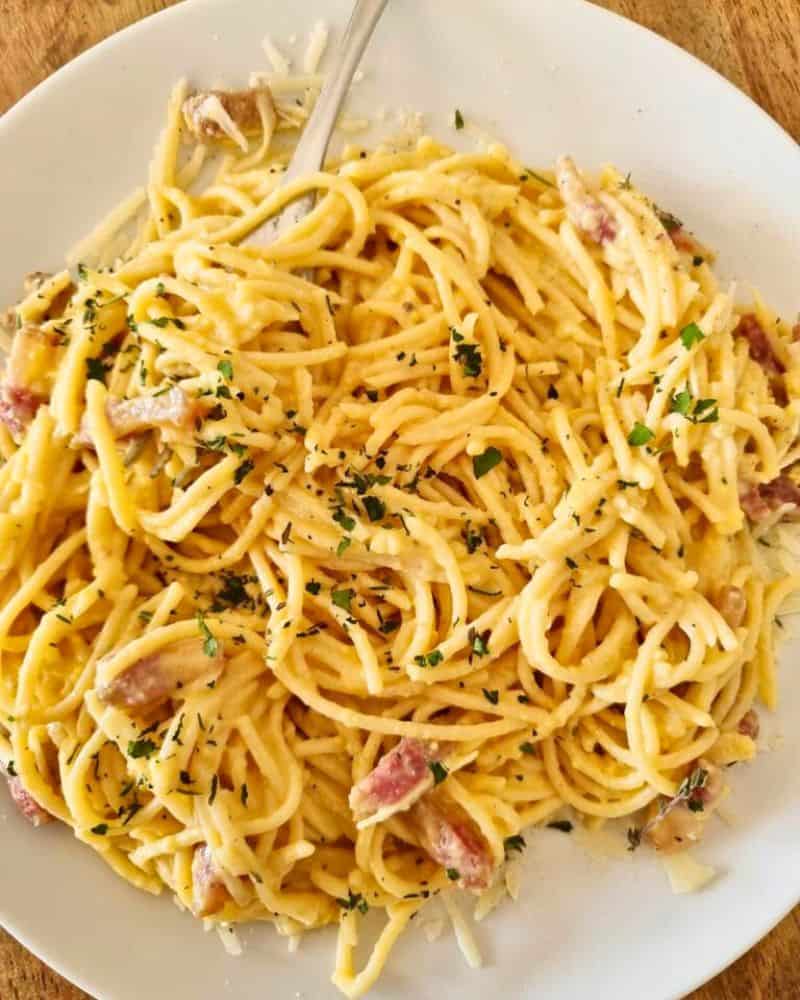
Authentic Spaghetti Carbonara Recipe
Make this classic spaghetti carbonara recipe with simple, authentic ingredients—no cream, just eggs, Pecorino Romano, guanciale, and black pepper.
Servings :4 people
Ingredients
- 300 grams Spaghetti
- 200 grams Guanciale
- 100 grams Pecorino Romano Cheese
- 4 Fresh eggs whole
- Fresh black pepper
Instructions
- 1. Cook the Pasta Bring a large pot of salted water to a boil. Add the spaghetti and stir to prevent sticking. Cook until al dente and reserve 1-2 cups of pasta water before draining.
- 2. Cook the Guanciale Dice the guanciale. Start it in a cold non-stick pan—no oil needed. Let it slowly render on medium heat until golden and crispy. Add black pepper just as the edges begin to brown.Cook’s Tip: Remove any excess fat from the guanciale before adding the pasta. Lower the heat when adding the eggs to avoid scrambling them. And don’t forget—fresh black pepper is key to balancing the richness!
- 3. Mix the Eggs and Cheese Beat 4 eggs (or 3 eggs: 2 yolks + 1 whole). Add grated Pecorino Romano, a good amount of black pepper, and a splash of hot pasta water to thin it slightly.PS - Roughly a handful of cheese (leave some for serving)
- 4. Combine It All Turn the heat down very low. Add drained pasta to the guanciale. Toss well to coat.Tip: Add the spaghetti gradually or in two parts, it's easier to manage and tansfer the spaghetti to the guanciale using a pair of tongs.As you bring the pasta across, keep stirring and lifting the spaghetti, keep going until you've transferred all the pasta.
- Remove the pan from heat and quickly pour in the egg mixture, stirring fast to avoid scrambling the eggs. Add a little pasta water as needed to loosen and create that creamy sauce.
- 5. Serve. Twirl/Carve onto plates, top with extra Pecorino and black pepper. Serve immediately!
Notes
Recipe Notes
Use guanciale for the most authentic flavor, but pancetta or bacon are good substitutes. Control the heat when adding the eggs to avoid scrambling. Reserve pasta water!Nutrition
Serving: 1servingCalories: 264kcalCarbohydrates: 19gProtein: 12gFat: 15gSaturated Fat: 6gPolyunsaturated Fat: 1gMonounsaturated Fat: 2gTrans Fat: 0.02gCholesterol: 182mgSodium: 231mgPotassium: 121mgFiber: 1gSugar: 1gVitamin A: 258IUCalcium: 83mgIron: 1mg
Did You Make This Recipe?Post a pic and mention @anosmickitchen or tag #anosmickitchen!