
Slow Cooker Marrow Bone Beef Broth
Learn how to make slow cooker bone broth with marrow bones, plus tips for extracting the most flavor, nutrients, and gelatin from your ingredients.
Do You Need Vinegar To Make Gelatin-Rich Bone Broth?
Not necessarily! While many recipes call for a splash of vinegar when simmering bones, it’s actually optional. Bones naturally contain collagen, which slowly breaks down into gelatin during long, gentle cooking. Vinegar or another acid can help release collagen a little faster by softening the mineral structure of the bones, but even without it, a slow-simmered stock can produce a rich, jiggly gelatin.
The key factors for a gelatin-rich broth are:
- Bone type: Joints, knuckles, oxtail, and other connective-tissue-rich bones yield more gelatin.
- Cooking time: Slow simmering for many hours (usually 6–24) allows collagen to fully transform into gelatin.
- Temperature: Gentle heat ensures collagen breaks down without toughening the meat.
So if your stock sets beautifully in the fridge without any vinegar, congratulations—you’ve unlocked the natural gelatin!
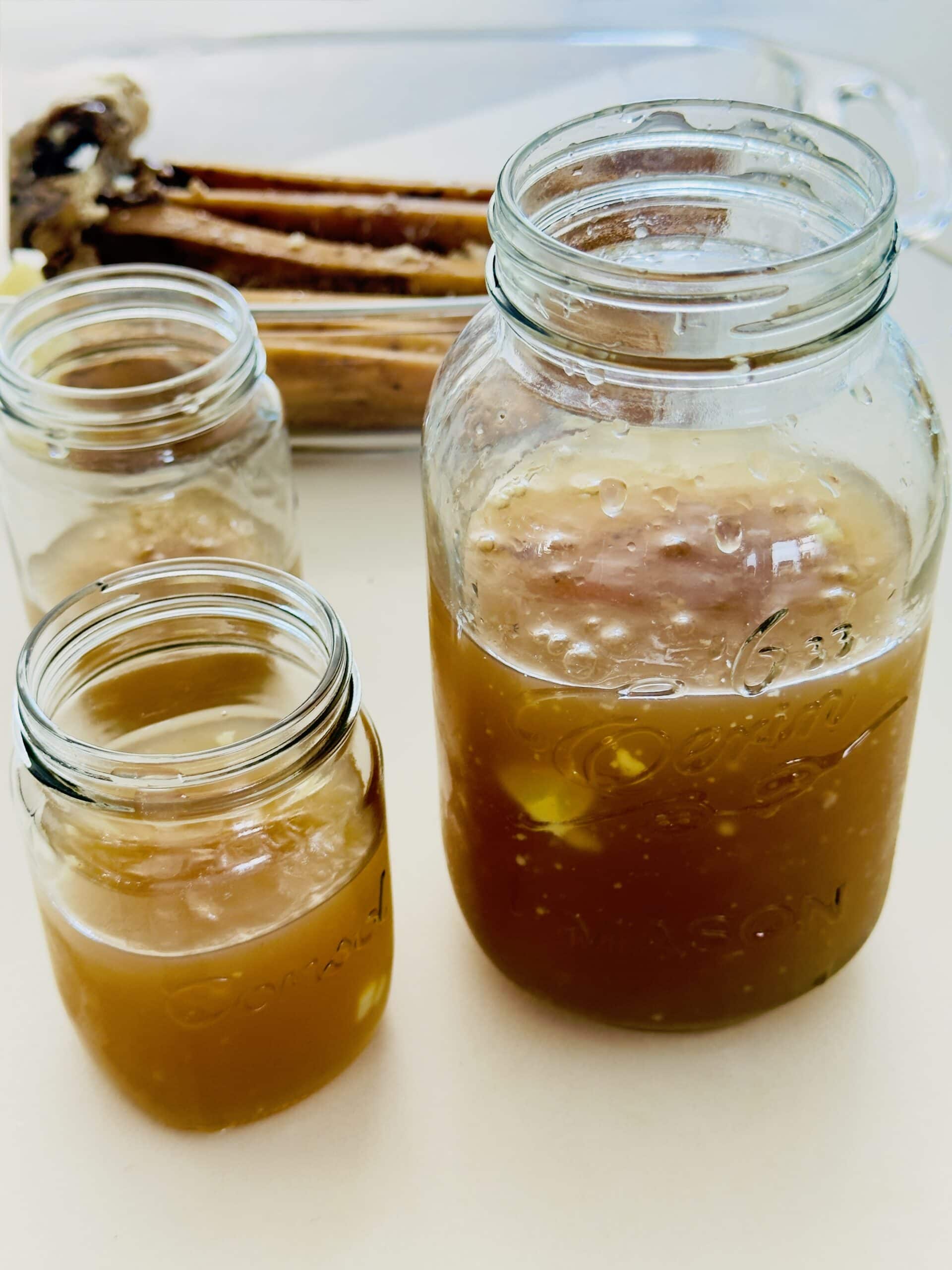
Rich, comforting, and deeply nourishing — a good bone broth is one of the most rewarding things you can make at home. This slow cooker version turns humble marrow bones into a golden, collagen-rich broth that’s full of body and flavor. Whether you sip it warm from a mug, use it as a base for soups and sauces, or freeze it for later, homemade beef broth is an easy way to bring old-fashioned goodness back into your kitchen.
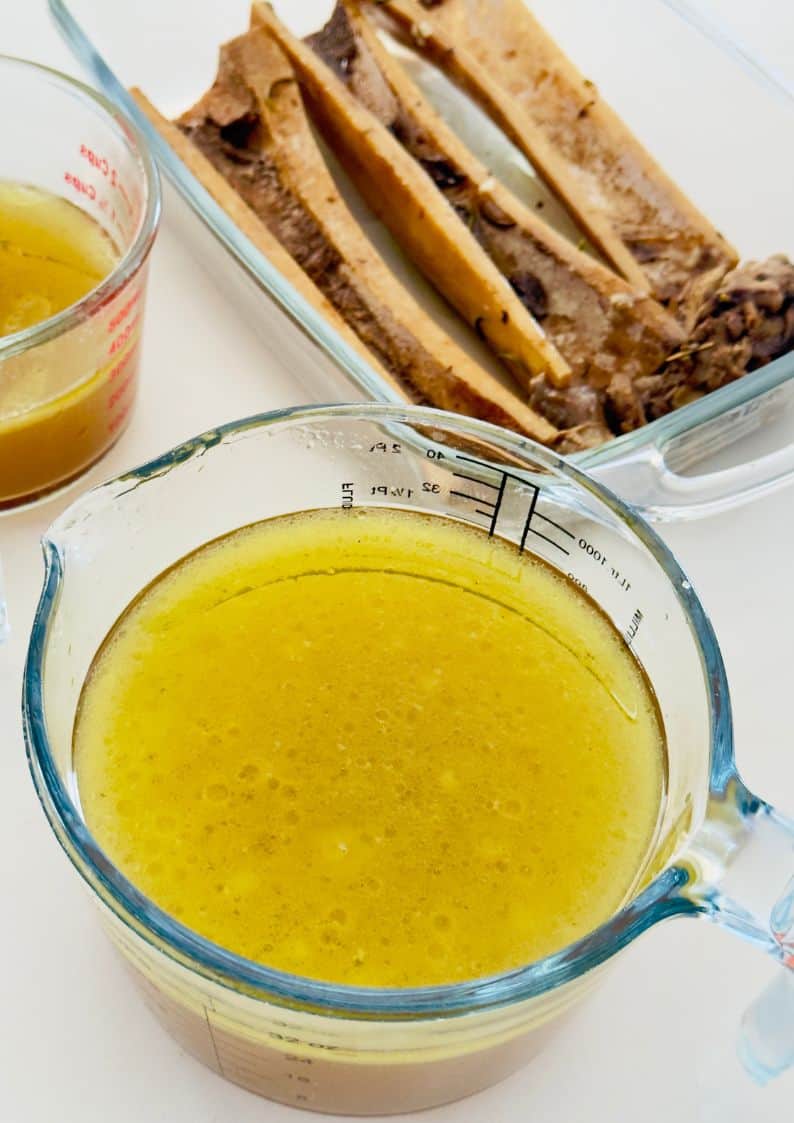
“While it bubbled away, I couldn’t resist ladling out half a cup—steaming, savory, and surprisingly soothing. It’s the kind of kitchen moment that slows everything down.” – I shared more thoughts, tips, and a cozy reflection about making this broth in my Substack newsletter—you can check it out for a little extra kitchen inspiration💛
Why You’ll Love This Beef Bone Broth
- Rich and nourishing: Made with marrow and joint bones, naturally high in collagen, gelatin, and minerals.
- Supports health: Collagen and minerals help support joint health, gut health, and glowing skin.
- Simple and hands-off: Just set it in your slow cooker or simmer on the stove while you go about your day.
- Versatile: Sip on its own, use as a base for soups, stews, sauces, or cook grains like rice and quinoa.
- Cozy and restorative: Warm, savory, and comforting—a perfect addition to any meal.
- Customizable: Add vegetables, herbs, or make a second batch with the same bones for more broth.
Two Ways to Make Bone Broth
There’s no single “right” way to make bone broth — it all depends on what you have and how much time you want to give it. Sometimes I go all in with mirepoix (that’s the French name for a mix of onion, carrot, and celery), herbs, and a splash of vinegar for extra depth. Other times, I keep it simple: just marrow bones, salt, herbs, and water, left to simmer low and slow until the broth turns golden and rich.

Both versions are deeply flavorful — the first more aromatic and robust, the second clean and pure, perfect for sipping or using as a gentle base for other recipes.
For this post, I’ll show you how to make both, including a few tips for getting the most gelatin and flavor out of your bones.
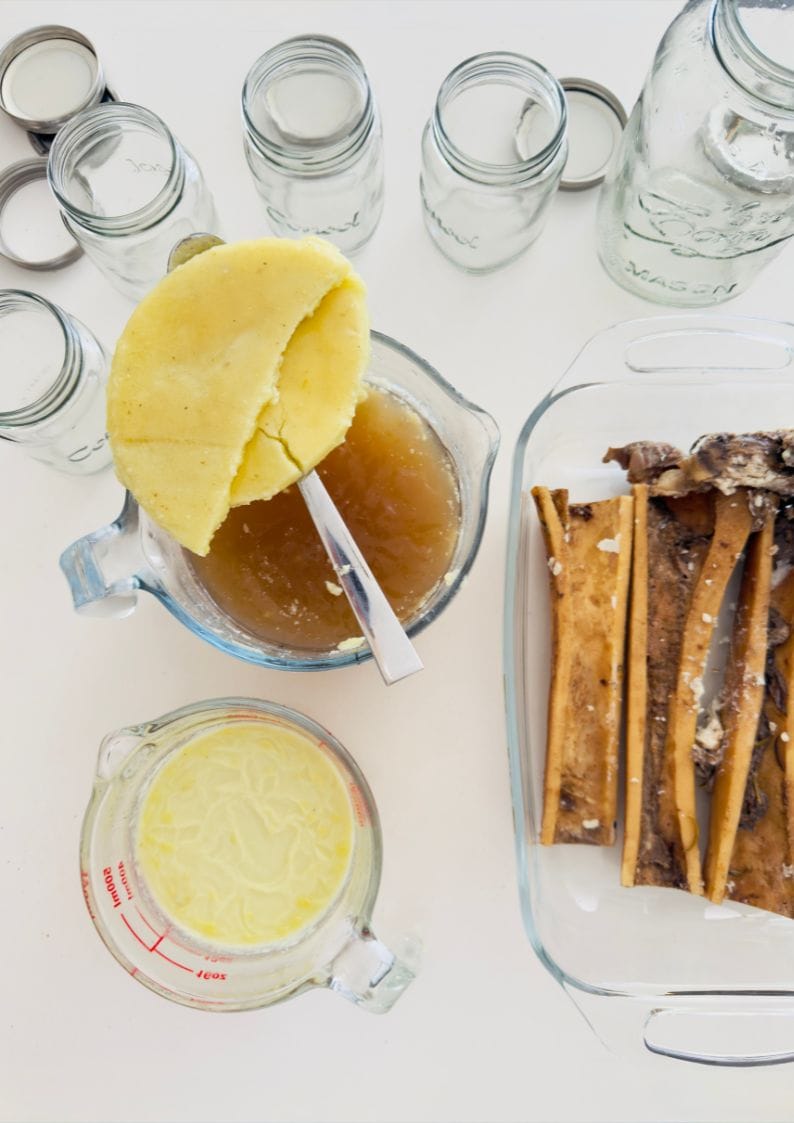
Ingredients
For the Full-Flavor Bone Broth
Rich, aromatic, and full-bodied — ideal for soups, sauces, or sipping warm from a mug.
- Beef marrow bones (a mix of knuckles, joints, and shank bones can also be used)
- Onion, quartered (peeling is optional. The onion leaves may add a brown color to the water)
- Carrots, roughly chopped
- Celery stalks, roughly chopped
- Bay leaves
- Fresh thyme or parsley
- Apple cider vinegar (helps extract minerals from the bones)
- Sea salt (or to taste)
- Cold water, enough to cover everything
Optional but lovely: garlic cloves and black peppercorns for more depth.

For the Simple Bone Broth
Clean, clear, and pure — perfect for lighter sipping or as a gentle base for sauces and grains.
- Beef marrow bones
- Sea salt
- Fresh herbs (thyme, parsley, or rosemary)
- Water
That’s it — no veggies, no fuss. Just slow cooking and patience doing the work.
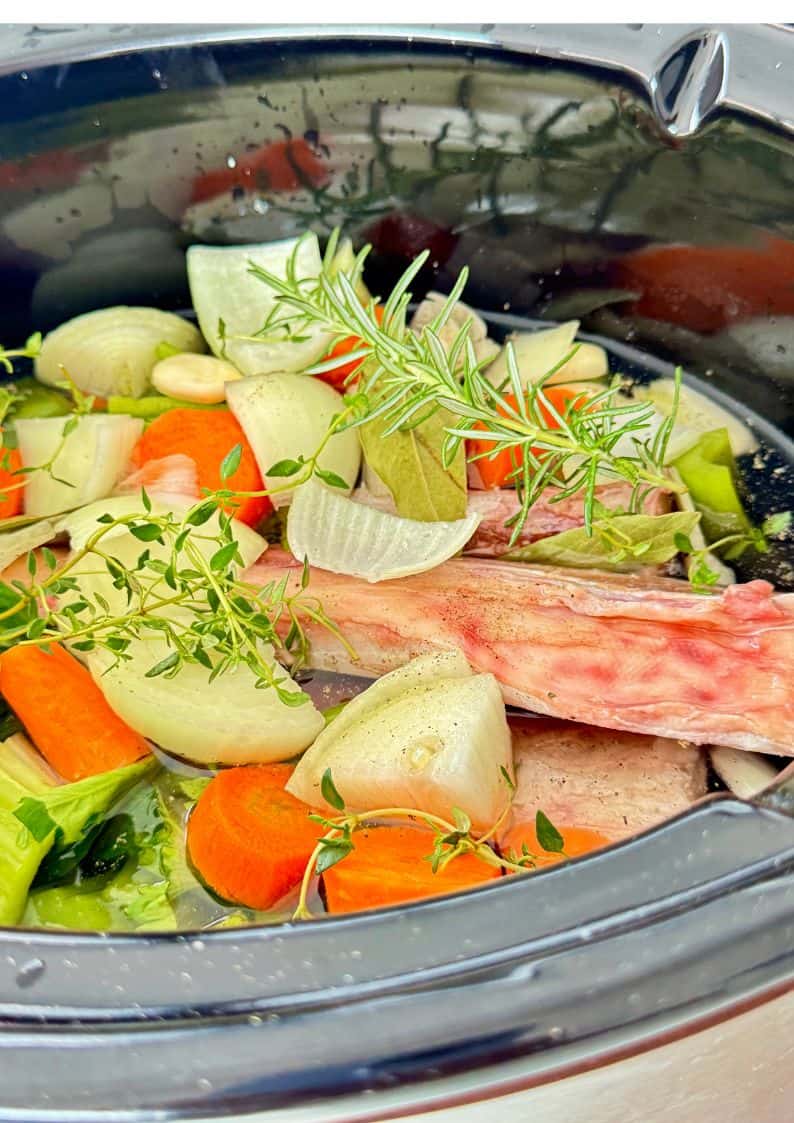
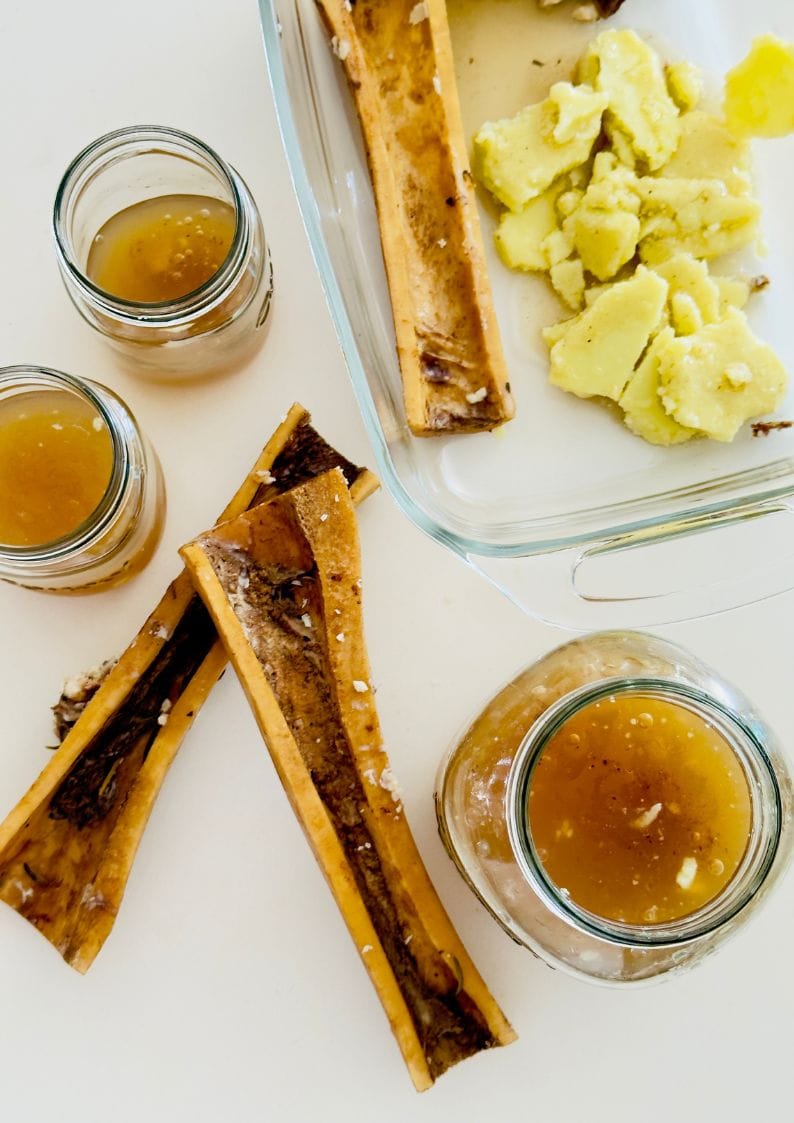
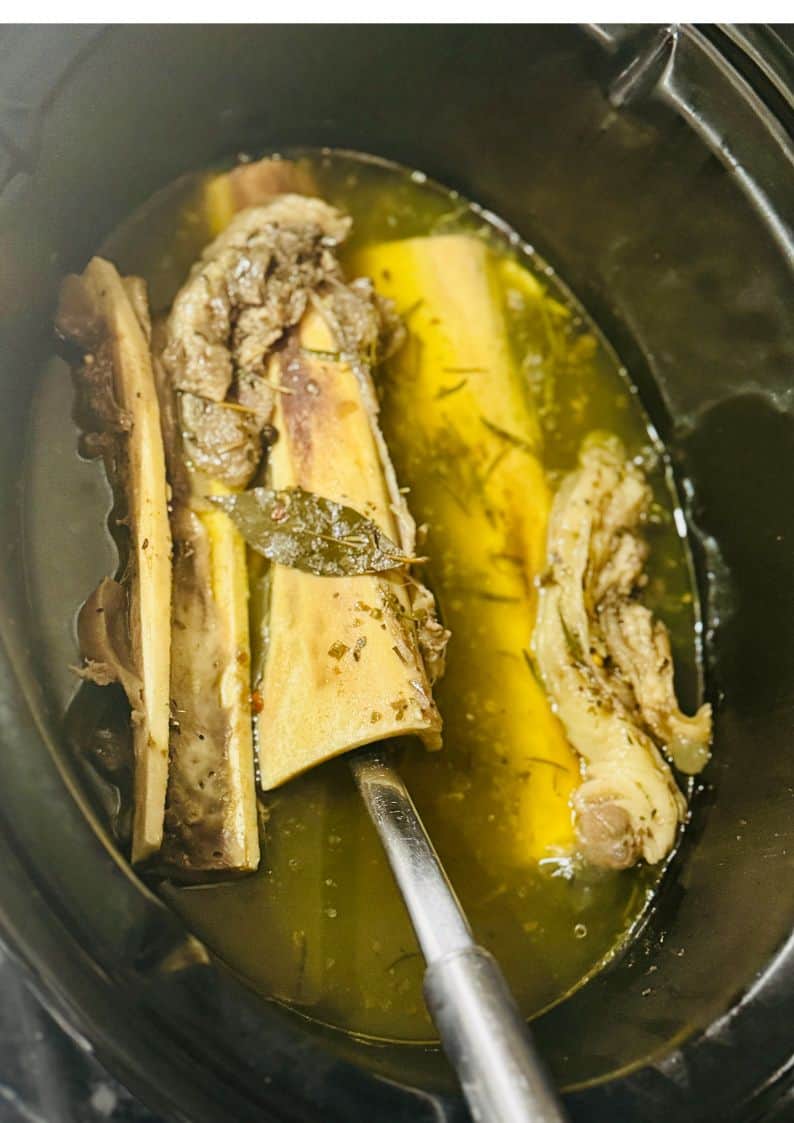
The first image was captured under natural light, though the sun may have been a bit strong. The image below was taken in the early hours of the morning. I make bone broth often, so each photo looks a little different, but I wanted to share the recipe with you.
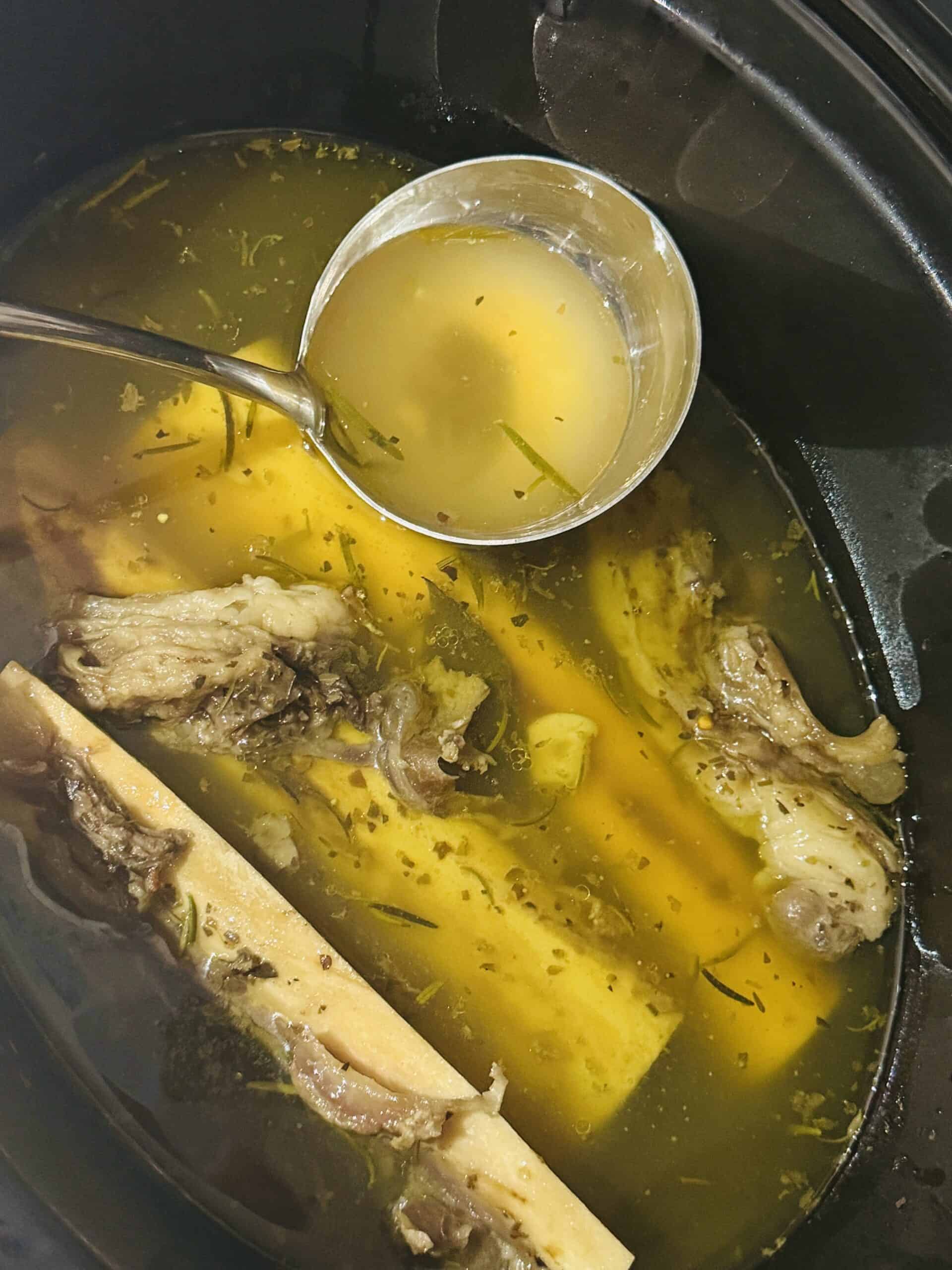
How To Make Bone Broth
1. Prepare the Bones
If you have time, roasting the bones adds a deeper, more caramelized flavor.
- To roast: Spread bones on a baking tray and roast at 200°C / 400°F for 30–40 minutes, turning halfway through.
- If you prefer a lighter broth, skip roasting and go straight to the slow cooker.
2. Add Everything to the Slow Cooker
For the Full-Flavor Broth:
Add the roasted (or raw) bones, onions, carrots, celery, bay leaves, herbs, apple cider vinegar, and salt. Fill with cold water until everything is just covered.
For the Simple Broth:
Add bones, salt, and herbs. Pour in enough water to cover the bones by about 2–3 cm (1 inch).
3. Cook Low and Slow
Set your slow cooker on LOW for 8–10 hours, or even overnight for richer flavor.
You’ll notice a golden layer of fat forming on top — this is pure flavor and nutrition.
Skim it off if you prefer a lighter broth, or stir it in for a more velvety finish.
4. Strain and Cool
Once done, remove the bones with tongs and strain the broth through a fine mesh sieve or cheesecloth into a large bowl or jug.
Let it cool completely before refrigerating — you’ll see it turn beautifully jelly-like once chilled (a good sign of collagen!).
5. Store or Freeze
- Keeps up to 5 days in the fridge.
- For longer storage, freeze in jars, ice cube trays, or small containers for up to 3 months.
Reheat gently on the stove whenever you need a comforting base or a nourishing sip.
Tips for the Best Bone Broth
- Get the most gelatin: Add a few joint or knuckle bones — they’re naturally higher in collagen. However, I must add that these marrow bones had loads of gelatin. And the difference with marrow bones vs joint and knuckle is that marrow bones make for better serving decor and eating.
- Add a splash of vinegar: It helps draw minerals and gelatin from the bones during cooking. I don’t always add vinegar and still get a good amount of gelatin.
- Reuse the bones: After straining, refill the slow cooker with water and cook again for a lighter “second batch” broth.
- Don’t rush it: Long, slow cooking is what transforms simple bones and water into something restorative.
FAQs
Can I use frozen bones?
Yes! Just thaw them slightly first and rinse before cooking. Frozen bones may release slightly less gelatin.
How do I store bone broth?
Cool completely, then refrigerate for up to 5 days or freeze for up to 3 months. A layer of fat on top helps preserve flavor.
Can I make bone broth without vinegar?
Yes, but adding a splash of vinegar helps extract more minerals and gelatin from the bones.
Can I add vegetables or herbs?
Absolutely! Onions, carrots, celery, garlic, and fresh herbs like thyme or parsley add depth of flavor.
What’s the difference between low and high cooking times?
Cooking on low for 12–16 hours gives a richer, more gelatinous broth, while high for 8–10 hours is faster but slightly lighter in texture.
There’s a quiet satisfaction in knowing you’ve made something from scratch that nourishes so deeply. It’s a reminder that food doesn’t always have to be fast to be good — sometimes, it just needs time.
Storage & Serving Ideas
How to Store
- Fridge: Keep in airtight jars or containers for up to 5 days. The broth will gel slightly when cold — that’s the collagen doing its job!
- Freezer: Portion into ice cube trays or small jars for easy use. It keeps beautifully for up to 3 months.
- Quick tip: Label your jars by flavor (e.g. “beef marrow – strong” or “simple broth”) so you can grab what you need at a glance.
How to Use Bone Broth
- Sip it warm: Pour a mugful, season with sea salt, black pepper, or a squeeze of lemon, and enjoy as a soothing drink.
- Make soups & stews: Use it as a rich base for vegetable soups, lentil stews, or hearty noodles.
- Cook your grains in it: Replace water with broth when cooking rice, quinoa, or couscous for extra flavor.
- Sauces & gravies: Reduce it down on the stove for a deeply savory, glossy sauce.
- Freeze for meal prep: Add cubes of frozen broth to stir-fries, sauces, or pasta dishes for a quick flavor boost.
There’s something grounding about having homemade broth ready to go — it turns the simplest meal into something that feels cared for.
More Home-Cooked Recipes
If you loved this slow-simmered broth, you might also enjoy:
- Simple Chicken Soup — gentle, classic comfort in a bowl.
- Lentils with Dumplings — hearty, homely, and full of flavor.
- Cozy Air Fryer Butternut Squash Soup — velvety smooth with caramelized onions.
- One-Pot Pasta with Peas and Potatoes — quick, creamy, and satisfying for weeknights.
If you make this recipe, I’d love to hear how it turned out. Your comments help other readers and are always one of my favorite parts of sharing recipes online.
Slow Cooker Marrow Bone Beef Broth
Equipment
- Slow Cooker Pot
Ingredients
- 1.5–2 kg (3–4 lb) beef marrow bones (you can also use a mix of knuckles, joints, and shank bones)
- 1 large onion, quartered (peeling is optional)
- 2 carrots, roughly chopped
- 2-3 celery stalks, roughly chopped
- 2 bay leaves
- A few sprigs of fresh thyme or parsley
- 1 tbsp apple cider vinegar (helps extract minerals from the bones) apple cider vinegar (helps extract minerals from the bones)
- 2 tsp sea salt (or to taste)
- 10–12 cups cold water, enough to cover everything
- 3–4 garlic cloves and a few black peppercorns for more depth (optional)
For the Simple Bone BrothClean, clear, and pure — perfect for lighter sipping or as a gentle base for sauces and grains.
- 1.5–2 kg (3–4 lb) beef marrow bones
- 1 tsp sea salt
- 1–2 sprigs fresh herbs (thyme, parsley, or rosemary) or a tablespoon of dried mixed herbs.
- 8–10 cups water
Instructions
Prepare the Bones
- If you have time, roasting the bones adds a deeper, more caramelized flavor.To roast: Spread bones on a baking tray and roast at 200°C / 400°F for 30–40 minutes, turning halfway through.If you prefer a lighter broth, skip roasting and go straight to the slow cooker.
Add Everything to the Slow Cooker
- For the Full-Flavor Broth:Add the roasted (or raw) bones, onions, carrots, celery, bay leaves, herbs, apple cider vinegar, and salt. Fill with cold water until everything is just covered.
For the Simple Broth:
- Add bones, salt, and herbs. Pour in enough water to cover the bones by about 2–3 cm (1 inch).
Cook Low and Slow
- Set your slow cooker on LOW for 8–10 hours, or even overnight for richer flavor. You’ll notice a golden layer of fat forming on top — this is pure flavor and nutrition. Skim it off if you prefer a lighter broth, or stir it in for a more velvety finish.
Strain and Cool
- Once done, remove the bones with tongs and strain the broth through a fine mesh sieve or cheesecloth into a large bowl or jug.Let it cool completely before refrigerating — you’ll see it turn beautifully jelly-like once chilled (a good sign of collagen!).
Store or Freeze
- Keeps up to 5 days in the fridge.For longer storage, freeze in jars, ice cube trays, or small containers for up to 3 months.Reheat gently on the stove whenever you need a comforting base or a nourishing sip.
Notes
Tips for the Best Bone Broth
- Get the most gelatin: Add a few joint or knuckle bones—they’re naturally higher in collagen.
- Add a splash of vinegar: It helps draw minerals and gelatin from the bones during cooking.
- Reuse the bones: After straining, refill the slow cooker with water and cook again for a lighter “second batch” broth.
- Don’t rush it: Long, slow cooking is what transforms simple bones and water into something restorative. For best results, cook overnight on low (12–16 hours) or use the high setting for 8–10 hours.
- Stovetop option: If you don’t have a slow cooker, simmer the bones gently in a large pot on the stove for 12–24 hours, skimming occasionally, for a rich, flavorful broth.
- Yield can vary based on the size of your bones and how much water you use. For richer broth, use slightly less water and cook longer; for a lighter broth, add more water and reduce cooking time slightly.