
How To Clean and Cook Artichokes (Plus A Starter Recipe!)
Every year during artichoke season, we go through this ritual of cleaning, preparing, and cooking them — and every year, they’re completely worth the effort. 🌿
This season felt even more special. We were celebrating our daughter’s engagement 🥂, and in honour of their love, we served artichokes three ways. The starters and mains were such a hit that I knew I had to share exactly how we prepared them.
Today, I’m walking you through how to clean and cook fresh artichokes step by step, plus one of our favourite simple starter recipes to try at home.
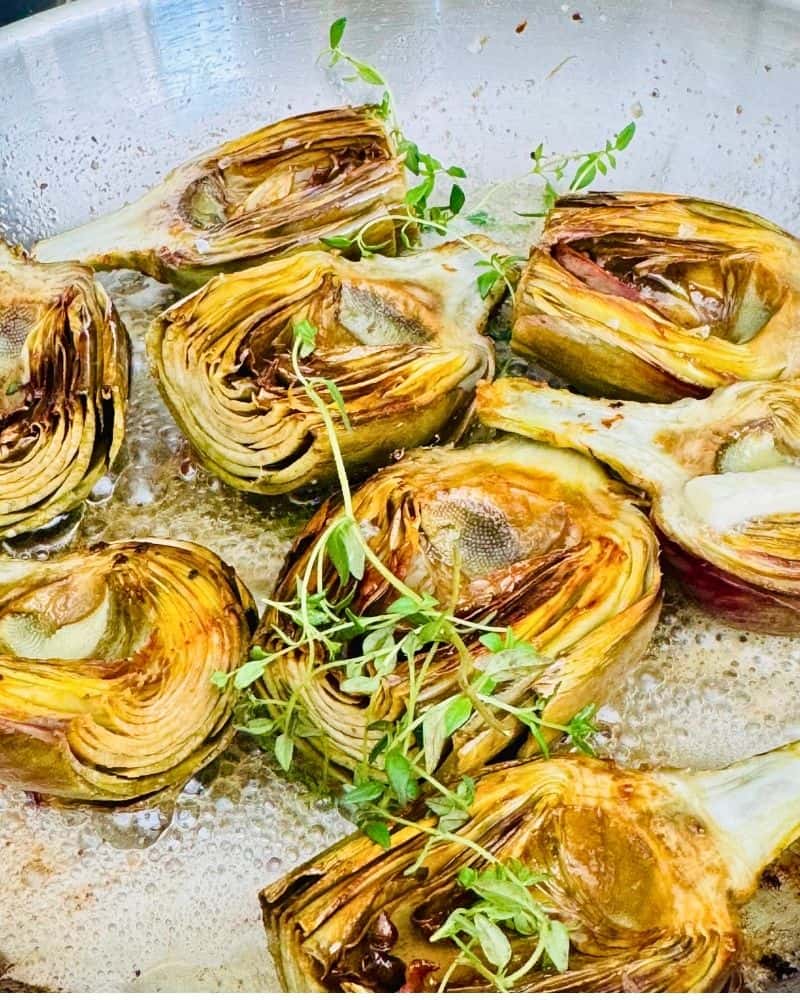
This season felt even more special: we were celebrating our daughter’s engagement 🥂, and in honour of their love, we served artichokes three ways. The starters and mains were a huge hit, so today I’m sharing exactly how we cleaned and cooked them — plus one of our favourite starter recipes to try.
Recipe Highlights
- Easy step-by-step guide to cleaning and cooking artichokes
- Two cooking methods explained – boiling + pan-searing
- Bright, fresh flavour with lemon, butter, olive oil & thyme
- Perfect for entertaining or a simple seasonal starter
- Beginner-friendly with clear prep instructions
- Great make-ahead option (can be cooked and stored ahead of time)
What to Serve with Artichokes
Artichokes pair beautifully with:
- Grilled Chicken or roasted meats.
- Simple pasta dishes
- Fresh salads
- Seafood (especially prawns or fish)
Why You’ll Love This Recipe
- Beginner-friendly – A simple, step-by-step guide for cleaning and cooking artichokes
- Seasonal and special – Perfect for spring cooking and entertaining
- Versatile – Serve as a starter, side dish, or add to pasta and salads
- Meal prep friendly – Cook once and freeze for later
What Are Artichokes?
Artichokes are edible flower buds from the thistle family, known for their tender hearts and slightly nutty flavour. While they may look intimidating at first, learning how to prepare artichokes at home is much easier than you think — and absolutely worth it.
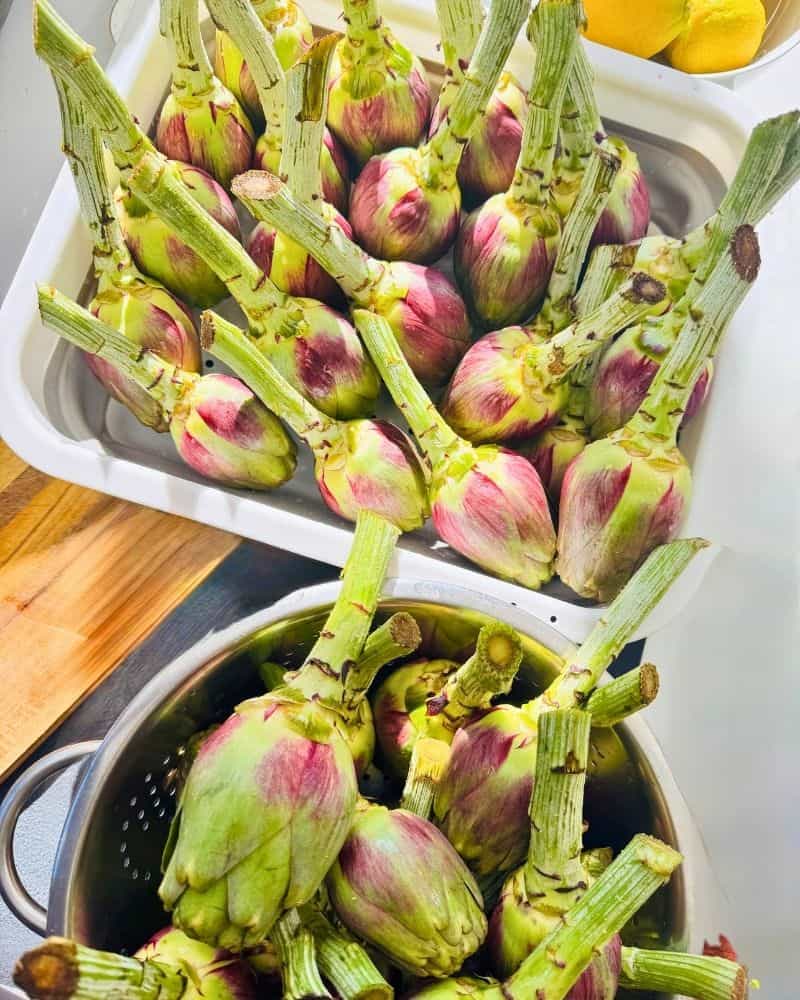
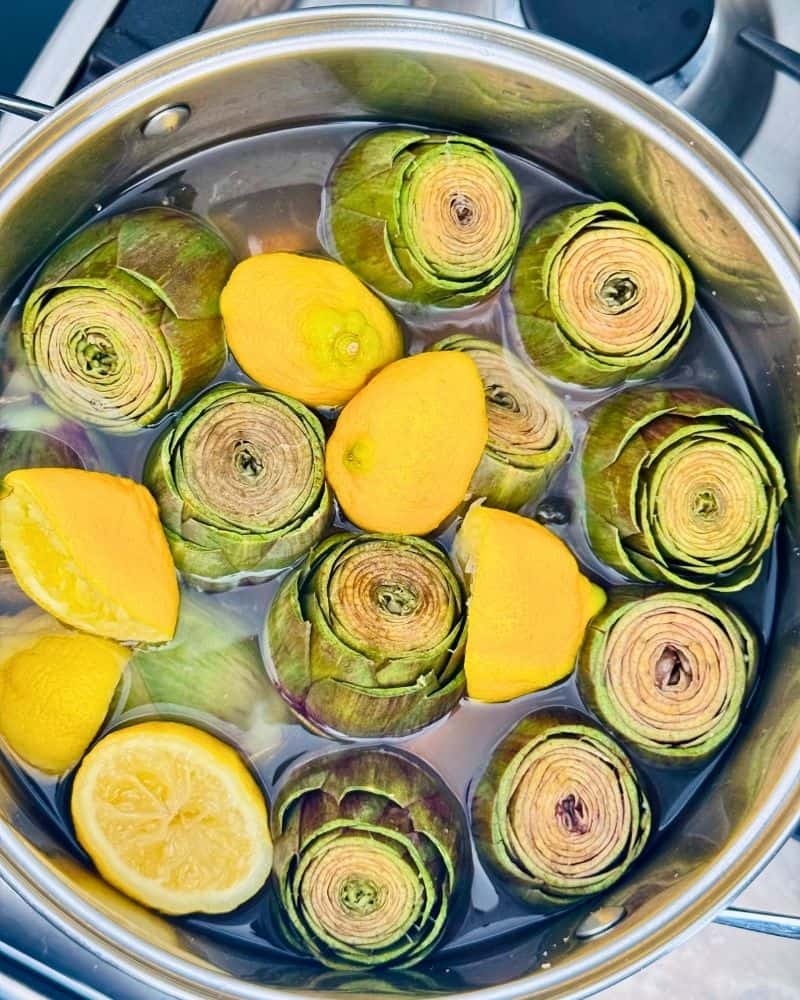
How to Clean, Prepare & Cook Artichokes
Step 1: Wash & Prep
- Rinse the artichokes thoroughly under cold water to remove any dirt.
- Turn them upside down to drain while you prepare the cooking water.
- In a large pot, fill with enough water to cover the artichokes.
- Squeeze in the juice of a lemon and add the lemon halves to the pot — this helps prevent browning and adds flavour.
Step 2: Trim the Artichokes
- Trim about half of the stem (don’t remove it completely — it’s edible and flavourful).
- Cut off the tough, pointy top to reveal the inside.
- Use kitchen scissors to snip off any sharp tips from the outer leaves.
- Make a small slit along the stem to help it cook evenly.
- Rub all cut surfaces with lemon juice to prevent browning.
Tip: If prepping multiple artichokes, keep all your used lemon halves — they go straight into the pot.
Step 3: Cook the Artichokes
- Place the prepared artichokes into the boiling lemon water.
- Cover with the lid slightly ajar and cook for 30–40 minutes, or until tender.
- Smaller artichokes may cook faster (around 30 minutes).
To freeze:
Cook for 5 minutes only, then cool completely before freezing.
Starter Recipe
Ingredients
- Cooked artichokes
- Unsalted butter
- Extra virgin olive oil
- Sea salt
- Fresh lemons (sliced, optional)
- Fresh thyme
- Parmesan cheese (for serving)
How To Make This Artichoke Starter
- Slice the cooked artichokes in half.
- Heat a pan and melt the butter.
- Place the artichokes cut-side down in the pan.
- Drizzle with olive oil and sprinkle with sea salt.
- Once golden, add a splash of white wine around the edges.
- Sauté until deeply golden and slightly crisp.
- Add fresh thyme right at the end.
- Serve topped with freshly grated Parmesan and an extra pinch of sea salt.
Optional: Add sliced lemon to the pan — caramelised lemons are incredible alongside.
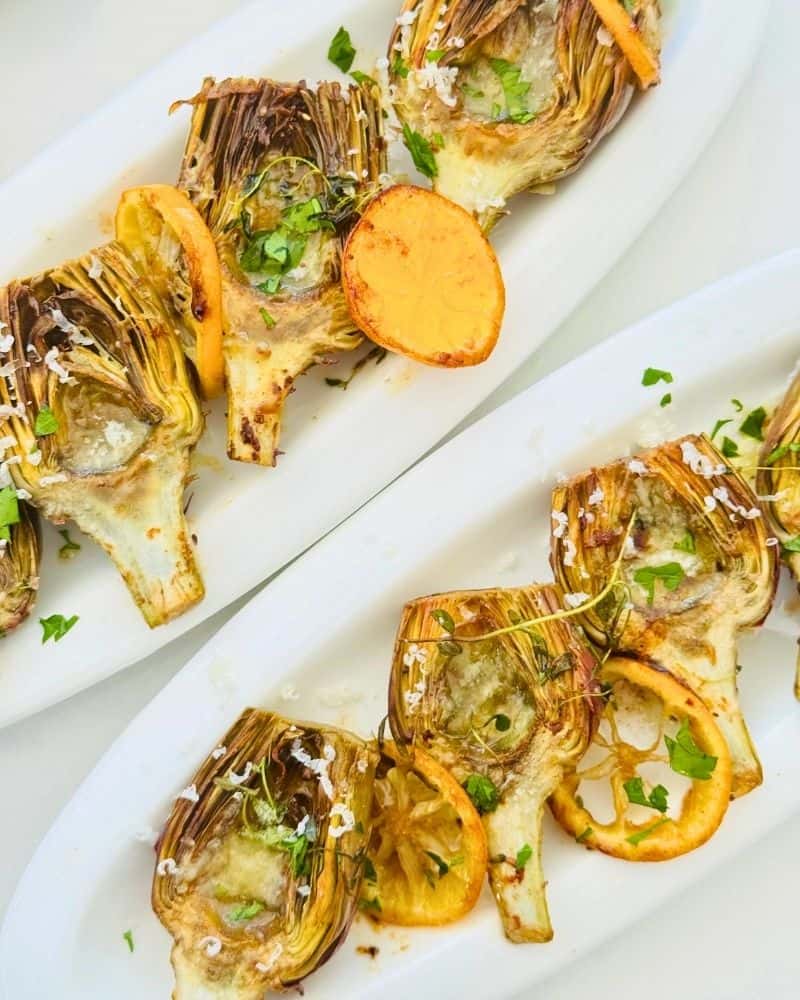
Variations & Serving Ideas
- Lemon-Garlic Butter Sauce: Add garlic and lemon zest for extra flavour
- Mediterranean Style: Toss with olives, capers, and cherry tomatoes
- With Pasta: Slice and add to a simple pasta dish like your
Spicy Cauliflower Pasta
Orecchiette with Broccoli
You can also serve these alongside:
Storage Tips
- Store cooked artichokes in the fridge for up to 3 days
- For freezing: blanch for 5 minutes, cool, and freeze for up to 3 months
- Reheat from frozen or thaw overnight in the fridge
More Recipes You’ll Love
- Spicy Cauliflower Pasta (No Roasting, Just 10 Minutes!)
- Best Orecchiette with Broccoli
- Beef Stew (South African Style)
- Overnight Slow Cooker Lamb Leg Roast
- Spaghetti all’Assassina
You’ll Love These!
Here are some of the most common questions about cooking and preparing artichokes
Frequently Asked Questions
How do you cook artichokes?
Steam or boil artichokes for 30–45 minutes, depending on size, until the leaves pull away easily and the heart is tender.
To steam, place trimmed artichokes stem-side up in a steamer basket over boiling water, cover, and cook for 30–45 minutes (or up to 1 hour for large artichokes) until tender.
To boil, place prepared artichokes in lemon water and cook for 30–40 minutes, or until the leaves pull away easily and the base is soft.
Once cooked, serve simply with olive oil and salt, or turn them into a starter like in this recipe.
How do you know when artichokes are cooked?
Artichokes are done when the outer leaves pull away easily and a knife slides through the base without resistance.
The heart should be tender but not mushy. You can also test by pulling off a leaf — if it comes away easily, the artichoke is ready to serve.
Once cooked, you can use them in simple dishes like a Mediterranean pasta salad or your Spicy Cauliflower Pasta (No Roasting, Just 10 Minutes!). They also make a great side dish or starter, just like in this recipe.
How long does it take to cook artichokes?
Whole artichokes typically take 30 to 40 minutes to cook in boiling water, depending on their size.
Smaller artichokes cook faster, while larger ones may take up to 45 minutes or slightly longer. They are ready when the leaves pull away easily and the base is tender when pierced with a knife.
Steaming usually takes a similar amount of time, depending on size.
Do you have to trim artichokes before cooking?
Yes, trimming is an important step. Removing the tough top, trimming the stem, and snipping sharp leaf tips helps the artichokes cook evenly and makes them easier to eat. This kind of prep is similar to how you prepare vegetables for dishes like your Best Orecchiette with Broccoli Recipe.
Can you eat the whole artichoke?
No, you can’t eat the entire artichoke — only certain parts are edible.
The edible parts include the base of the leaves, the stem, and the heart. The outer leaves are scraped with your teeth to remove the tender flesh, while the heart is the most flavourful part.
The fuzzy centre (called the choke) should be removed before eating. Once prepared, the heart is perfect for adding to pasta dishes like Anchovy Pasta, for a simple, flavour-packed meal.
Why do you put lemon in the water when cooking artichokes?
Lemon juice helps prevent the artichokes from browning and adds a light, fresh flavour while they cook. It’s especially helpful once the artichokes have been cut. That same bright flavour works beautifully in fresh, simple dishes like your Cucumber Tomato Feta Salad.
Can you cook artichokes ahead of time?
Yes, artichokes can be cooked in advance and stored in the fridge for up to 3 days. Simply reheat them gently or use them in another recipe like pasta, salads, or starters. They pair especially well with comforting dishes like your Italian-Style Seafood Marinara
Can you freeze cooked artichokes?
Yes. For best results, blanch the artichokes for about 5 minutes, let them cool completely, then freeze in airtight bags for up to 3 months. Having prepped vegetables ready makes weeknight meals like Flexible Chicken Meal Prep even easier to put together.
What’s the best way to serve artichokes?
Artichokes are delicious served simply with olive oil, butter, and salt, or turned into a starter by pan-frying with herbs and lemon. You can also serve them alongside mains like your Pan-Fried Yellowtail or toss them into pasta for a quick meal.
Are artichokes healthy?
Yes, artichokes are rich in fibre, antioxidants, and vitamins. They’re a nutritious addition to a balanced diet and a great way to add more vegetables to your meals — especially when paired with wholesome recipes like your Roasted Sweet Potato Soup.
What can I serve with artichokes?
Artichokes pair well with roasted chicken, seafood, pasta, and fresh salads. For more detailed ideas, see the How to Serve Artichokes section above.
Try serving them alongside dishes like your 10-Minute Baked Chicken Breasts, Seafood Marinara with Shrimp, or a simple pasta for a complete meal.
Pin this for later 📌
Don’t lose this recipe — save it to your favourite Pinterest board so you can come back to it anytime!

If you make this recipe, I’d love to hear how it turned out. Your comments help other readers and are always one of my favorite parts of sharing recipes online.
How to Clean and Cook Artichokes + Starter Recipe
Ingredients
- 2–4 small artichokes
- 3–4 tbsp unsalted butter
- 2 extra virgin olive oil
- 1–2 cloves garlic minced (optional)
- Zest and juice of 1 lemon
- Lemon slices for serving (optional)
- 2–3 tbsps white wine
- Fresh thyme sprigs
- Sea salt to taste
- Freshly grated Parmesan cheese for serving
Instructions
- Prepare the artichokes
- Trim the stems and remove any tough outer leaves. Cut off the top 1 inch of each artichoke and rub all cut surfaces with lemon juice to prevent browning.
- Boil the artichokes
- Place the artichokes in a pot of boiling water. Cover and cook for 30–40 minutes, depending on size, until tender. Smaller artichokes usually take around 30 minutes.
- Slice the artichokes
- Drain and let cool slightly. Slice each artichoke in half lengthwise.
- Sauté in butter
- Melt the butter in a medium-high skillet. Place the artichoke halves cut-side down and cook until they begin to brown and crisp.
- Drizzle with olive oil, sprinkle with sea salt, and add lemon zest, lemon juice, and garlic (if using). Toss gently to coat.
- Add wine and thyme
- Pour the white wine around the edges of the pan (not directly over the artichokes). Add fresh thyme sprigs and allow the liquid to reduce slightly.
- Finish and serve
- Remove from heat and transfer to a serving platter. Serve with freshly grated Parmesan, extra sea salt, and sautéed lemon slices if desired.
Notes
Add a little extra butter or olive oil at the end for a richer finish.
Leftovers keep well in the fridge for up to 2 days. Reheat gently in a skillet.
Nutrition
Pin this for later 📌
Don’t lose this recipe — save it to your favorite Pinterest board so you can come back and make it anytime!