
Homemade Focaccia (Two Easy Ways: Same-Day or Two-Night Fermentation)
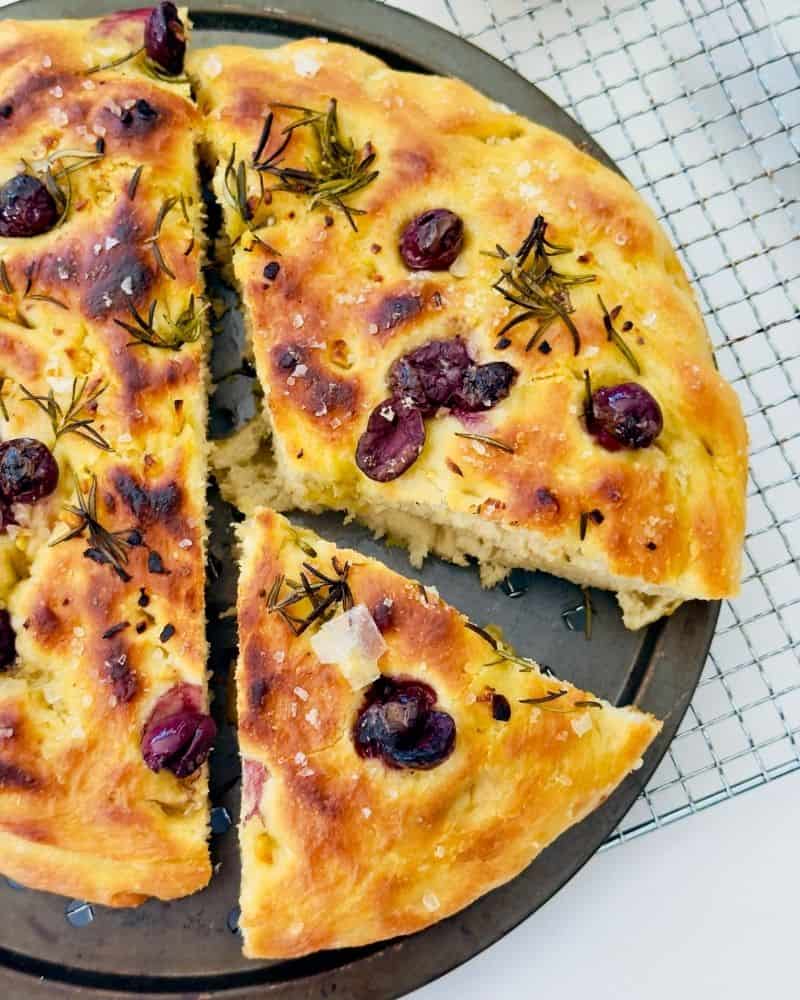
There’s nothing like homemade focaccia — soft and fluffy with a golden crust and those signature dimples that hold pockets of olive oil and herbs.

Best Oils for Baking Cookies
Choosing the right oil can affect both the flavour and texture of your cookies. Here’s a simple guide:
Coconut Oil
- Adds a light coconut flavour
- Helps cookies set well
- Great for dairy-free baking
Neutral Oils (Avocado, Sunflower, Canola)
- Mild flavour
- Lets the other ingredients shine
- Best all-round option
Olive Oil
- Works well in most recipes
- Use light olive oil for a neutral taste
- Extra virgin adds a slightly savoury note
Butter
- Rich flavour and classic cookie texture
- Not dairy-free, but great for indulgent versions
Quick Tip:
If you want a classic cookie flavour, use a neutral oil or butter.
If you don’t mind a slight flavour twist, coconut oil or olive oil both work beautifully.
In this post, you’ll learn two simple methods:
- Same-Day Thick-Crust Focaccia – perfect when you want bread today
- Two-Night Fermented Thin-Crust Focaccia – for a chewier, flavorful Italian-style version
Whether you’re a beginner or an experienced baker, you’ll find step-by-step guidance, expert tips, and ideas for toppings and serving.
Why You’ll Love This Focaccia
- Delicious for sandwiches, dipping in olive oil, or enjoying on its own
- Soft, airy crumb with a golden, crisp top
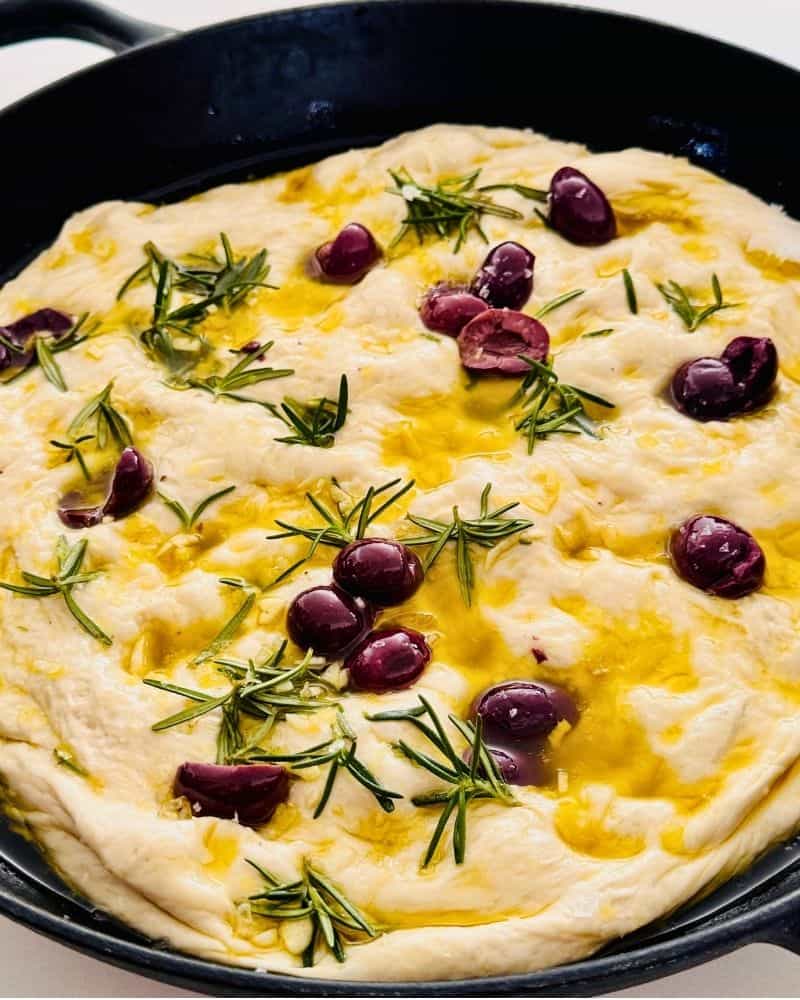
- Customizable with herbs, garlic, olives, or cheese
- Minimal ingredients, simple steps — perfect for beginners
Ingredients
These ingredients work for both versions; the difference is in the flour and proofing time.
- Flour:
- For same-day focaccia: Bread flour or all-purpose flour
- For fermented focaccia: A mix of 00 flour and bread flour for a softer, chewier texture
- 2 ¼ teaspoons (7 g) dry yeast
- 1 ½ cups (350 g) lukewarm water (tepid, not hot)
- 2 tablespoons extra virgin olive oil (plus more for drizzling)
- 1 teaspoon fine sea salt (adjust to taste)
- Optional: Semolina for dusting the pan, fresh herbs, olives, or cheese for toppings

Step-by-Step Instructions
1. Activate the Yeast
In a small bowl, combine lukewarm water and yeast. Let it sit for 5–10 minutes until foamy.
Tip: If your yeast doesn’t foam, it may be expired or the water wasn’t the right temperature.
2. Mix the Dough
In a large bowl, combine the flour and salt. Add the yeast mixture and olive oil. Stir with a spatula or wooden spoon until a soft, sticky dough forms.
3. Choose Your Method
Option 1: Same-Day Thick-Crust Focaccia
- Knead the dough: Turn the dough onto a floured surface and knead for 8–10 minutes until smooth and elastic.
- First rise: Place the dough in a lightly oiled bowl, cover, and let rise for 1–2 hours until doubled in size.
- Prepare the pan: Coat a skillet or baking tray generously with olive oil. Gently transfer the dough, letting it spread naturally.
- Second rise: Let it rest for 20–30 minutes while the oven preheats to 425°F (220°C).
- Dimple and drizzle: Press your fingertips gently into the dough to create dimples. Drizzle with olive oil and sprinkle on toppings.
- Bake: Bake for 25–30 minutes until golden brown and crisp on the edges. Cool for at least 10 minutes before slicing.
Option 2: Two-Night Fermented Thin-Crust Focaccia
- Cold fermentation: Drizzle a little olive oil over the mixed dough, cover tightly, and refrigerate for 36–48 hours.
- Bring to room temperature: Remove the dough from the fridge and let it sit, still covered, for 2–3 hours until puffy and bubbly.
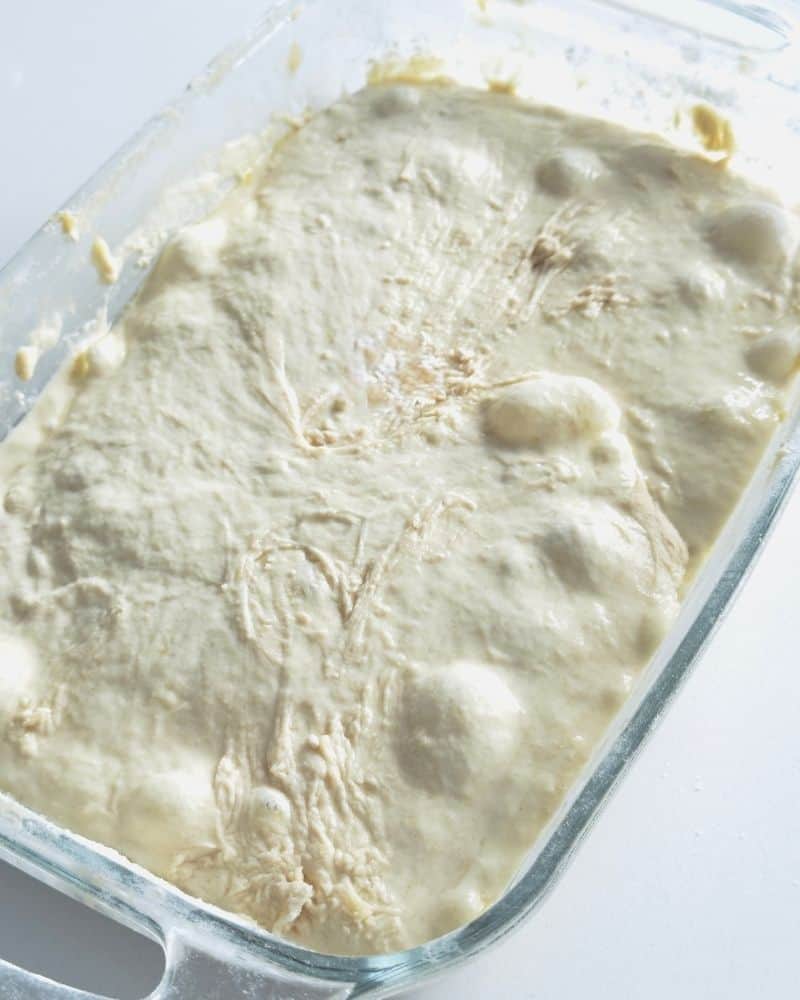
- Prepare the pan: Line a 9×13-inch tray with parchment paper. Sprinkle with semolina and drizzle with olive oil. Carefully tip the dough into the tray without stretching it.
- Final rise: Let it rest 30–45 minutes, uncovered, while the oven preheats to 450°F (230°C).
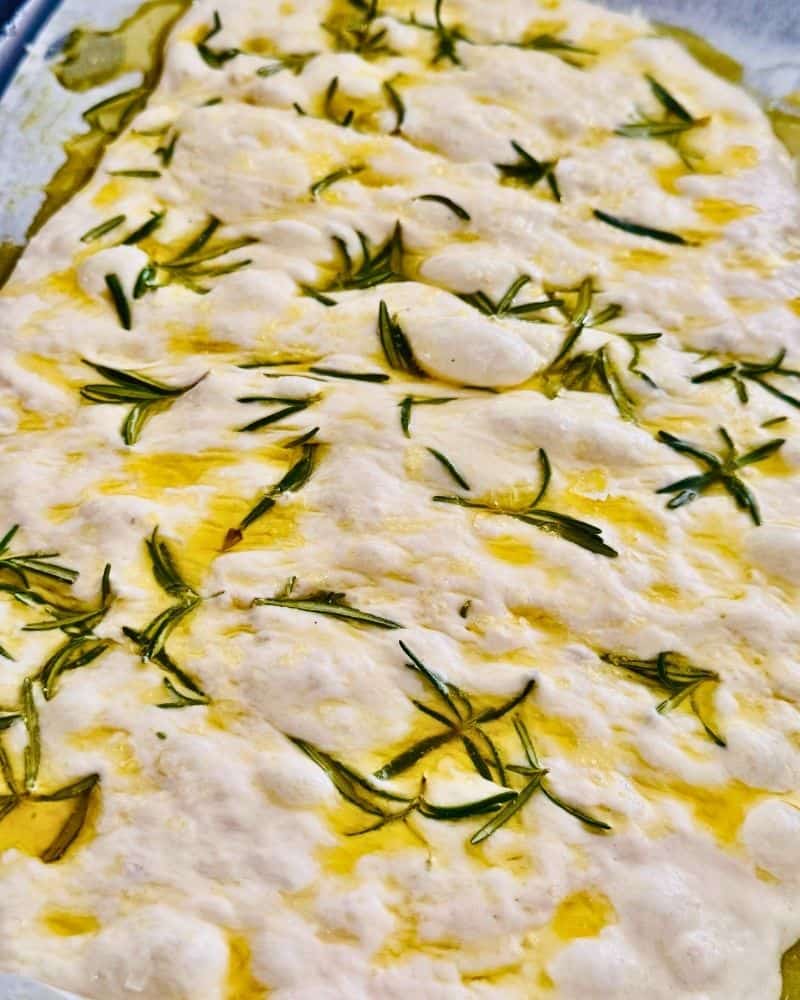
- Dimple and drizzle: Gently dimple the surface, drizzle with olive oil, and add toppings.
- Bake: Bake for 20–25 minutes until golden with crisp edges. Cool for at least 10 minutes before slicing.
Expert Tips
- Brush with olive oil after baking for extra shine and flavor.
- Handle the dough gently to keep the airy texture.
- Dimple generously — those pockets hold the olive oil and toppings.
Topping Variations
- Herb Focaccia: Rosemary, thyme, or oregano
- Garlic Focaccia: Press thin slices of garlic into the dough before baking
- Cheesy Focaccia: Sprinkle with parmesan, mozzarella, or feta
- Olive Focaccia: Add sliced pitted olives for a Mediterranean twist
Storage & Freezing
- Room temperature: Store in an airtight container for 2–3 days.
- Freezing: Wrap tightly in foil or plastic wrap and freeze for up to 1 month. Reheat in the oven for best texture.
FAQs
Can I make it gluten-free?
Yes! Use a quality gluten-free bread flour blend and slightly reduce the water if the dough feels too wet.
How do I know when it’s ready to bake?
The dough should look puffy and airy, and a gentle press with your finger should leave an indent that slowly springs back.
Can I use a different pan?
Yes! A round cast-iron skillet, sheet pan, or even a Pyrex dish works well.


Serving Ideas
- Serve warm with olive oil and balsamic vinegar for dipping
- Slice for sandwiches with grilled vegetables, cheese, or cold cuts
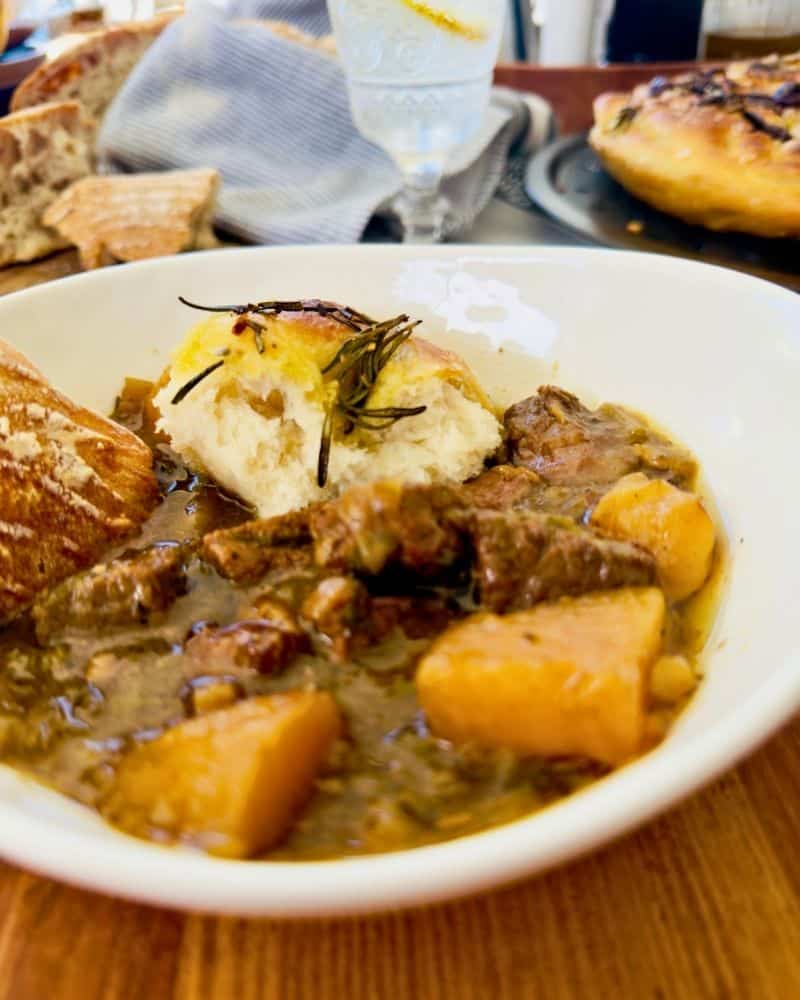
- Pair with hearty soups or salads for a simple meal
More Recipes to Try
Cozy baking
Entertaining
Meal prep
If you make this recipe, I’d love to hear how it turned out. Your comments help other readers and are always one of my favorite parts of sharing recipes online.
Easy Focaccia Recipe – Thin Crust, Soft & Fluffy
Ingredients
Slow-Fermented Focaccia (48-Hour Dough)
- 2 cups (300)grams 00 flour
- 1 ½ cups (200g) (200g) bread flour
- 2 ¼ teaspoons (7g) active dry yeast
- 1 ½ cups (350g) lukewarm water (tepid, not hot)
- 1 teaspoon sea salt (optional, adjust to taste)
- 2 tablespoons extra virgin olive oil (plus more for drizzling)
- Semolina, for the pan (optional, for a crisp base)
- Flaky salt and toppings (fresh rosemary, cherry tomatoes, olives, etc.)
Instructions
- Activate the yeast (optional but recommended for reliability): In a small bowl, whisk the yeast into the lukewarm water. Let it sit for 5–10 minutes until foamy.Tip: If your yeast doesn’t foam, it may be expired, or the water was too hot or cold.
- Mix the dough: In a large mixing bowl, combine the 00 flour, bread flour, and salt. Add the activated yeast mixture and olive oil. Mix with a spatula or wooden spoon until a very soft, sticky dough forms.
- First rest — cold fermentation:Drizzle a little olive oil over the dough to prevent drying out. Cover the bowl tightly with plastic wrap or a lid and refrigerate for 36–48 hours. This slow fermentation develops deep flavor and an airy, open crumb.
- Bring to room temperature: Remove the dough from the fridge and let it sit, still covered, for 2–3 hours until puffy and bubbly.
- Prepare the pan: Line a 9×13-inch baking tray with parchment paper. Sprinkle the base generously with semolina and drizzle with olive oil. Gently tip the dough onto the tray — don’t pull or stretch it. Let it naturally spread, nudging it lightly with oiled hands if needed.
- Final rise: Let the dough rest in the tray, uncovered, for 30–45 minutes while you preheat your oven to 450°F (230°C). It should puff up slightly during this time.
- Dimple and drizzle: Drizzle the top with olive oil, then press your fingertips into the dough to create deep dimples. Top with flaky salt, rosemary, or any desired toppings.
- Bake: Bake for 25–30 minutes until golden brown on top and the edges are crisp.
- Cool and serve: Cool on a rack for at least 10 minutes before slicing. Serve warm or at room temperature.
Notes
Tips for Success
- Always use lukewarm water — too hot will kill the yeast, too cold will slow it down.
- Don’t over-handle the dough; keeping the air bubbles intact creates the light, airy texture.
- The longer the fermentation, the more flavorful your focaccia will be.
- The dough will be very soft and sticky — this is what gives you the airy, bubbly texture. Avoid adding extra flour.
- Handle the dough gently: when pressing in dimples with your fingers, don’t press all the way through to the tray — this dough is thin, so just press lightly.
- To prevent toppings from burning, use a pastry brush to lightly coat rosemary or other herbs with olive oil.
- For maximum flavor, allow the dough to ferment for the full 48 hours in the fridge.
- Leftovers keep well in an airtight container for up to 2 days and toast beautifully.